Best Presence Sensor 2026: Aqara FP2 vs FP300 vs EP1
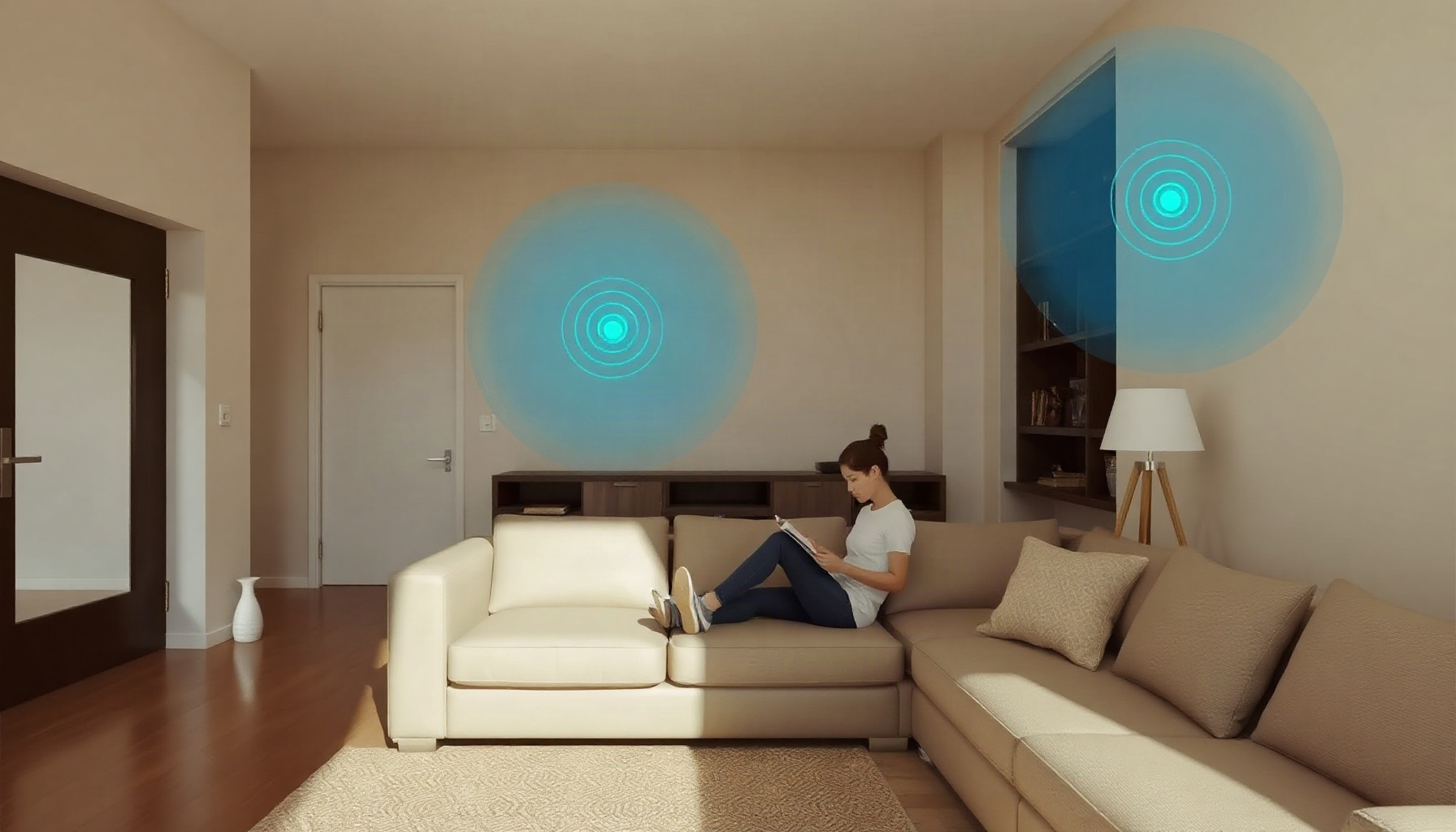
The best presence sensor 2026 depends on your protocol, budget, and automation depth. For most homeowners, the Aqara Presence Multi-Sensor FP300 wins as the all-rounder: battery-powered, Matter-over-Thread, and hub-free. Unlike PIR motion sensors that only catch movement, mmWave presence sensors detect stationary people too (Aqara FP2).
How We Tested
This comparison is based on the vendors’ official product pages, spec sheets, and official documentation — we did not run the products hands-on. We did not test real-world battery life, detection accuracy claims, fall detection reliability, or Home Assistant edge cases. Last reviewed: August 2026.
What is the best presence sensor in 2026?
The best presence sensor 2026 varies by use case: the FP300 is the best all-rounder due to its battery power, Matter-over-Thread support, and no-hub requirement. The FP2 excels at zone-based automation and fall detection. The EP1 suits Home Assistant and DIY users. The FP400 is worth watching for advanced spatial tracking.
The FP300 balances cost, protocol flexibility, and ease of deployment. At $49.99 it supports both Thread and Zigbee, exposes Matter-over-Thread for hub-free setups, and includes temperature, humidity, and light sensing. The FP2 costs more but offers 30 customizable zones and ceiling-mount fall detection (Aqara FP2).
Aqara Presence Sensor FP2
The Aqara Presence Sensor FP2 is a 60 GHz mmWave device covering up to 40 m² with still-presence detection and tracking for up to five people (best with three). It supports 30 customizable zones, fall detection (ceiling mount only), AI sleep monitoring, and pet filtering. It connects via Wi-Fi 2.4 GHz and Bluetooth 4.2 with no hub required (Aqara FP2).
Priced at $82.99 in the US and £82.99 in the EU, the FP2 is the most feature-rich single-sensor option. It requires wired USB-C power, which limits placement flexibility. Home Assistant support works via the HomeKit Controller integration, bypassing the need for an Aqara hub. However, its 2.4 GHz Wi-Fi-only connectivity excludes Wi-Fi 6 and Thread (Aqara FP2).
Aqara Presence Multi-Sensor FP300
The Aqara Presence Multi-Sensor FP300 combines PIR and 60 GHz mmWave to detect still presence within a 6 m range and 120° field of view. It runs on two CR2450 batteries for up to three years (Zigbee) or two years (Thread). It supports Matter over Thread, meaning no hub is needed when paired with Apple Home, Google Home, Alexa, or Home Assistant (Aqara FP300).
At $49.99, the FP300 is the most affordable mmWave-capable Aqara sensor. It lacks multi-person tracking, zones, fall detection, and pet filtering, which limits its automation scope. In Zigbee mode, advanced app settings require an Aqara hub. The FP300 is ideal for users prioritizing simplicity and Matter compatibility over advanced features (Aqara FP300).
Aqara Spatial Multi-Sensor FP400
The Aqara Spatial Multi-Sensor FP400 is a pre-release device using mmWave and AI spatial sensing to detect up to 10 people across a 10×8 m area, tracking position and posture (standing, sitting, lying). It supports 30 zones and fall detection dependent on mounting. It requires an Aqara Hub M3, M100, or M200 with firmware 4.5.70 or higher for full functionality (Aqara FP400).
The FP400 represents Aqara’s most advanced spatial sensing technology, showcased at CES 2026. It exposes presence and light data over Matter-over-Thread, but full features require the Aqara Hub ecosystem. Since it is in pre-release, retail pricing has not been announced as of August 2026, and the official forum trial price of $19.99 does not reflect final cost (Aqara FP400).
Everything Presence One (EP1)
The Everything Presence One (EP1) is a DIY kit combining 24 GHz mmWave and Panasonic industrial PIR for presence detection up to 25 m (mmWave) and 12 m (PIR). It runs on USB-C 5V/0.5A power and ships preloaded with ESPHome, offering native Home Assistant integration and Bluetooth proxy support. It also includes SHTC3 temperature and humidity sensors plus a BH1750 ambient light sensor (EP1).
Priced at $65.00, the EP1 is currently on backorder with shipments expected around August 21, 2026. It requires user assembly and does not support Matter, Thread, or Zigbee — only Wi-Fi via ESPHome. The onboard temperature sensor reads approximately 2 °C high, but the vendor ships a 2 °C offset and allows user configuration (EP1).
MOES Zigbee Presence Sensor
The MOES Zigbee Human Presence Sensor (ZSS-LP-HP02-MS) uses 24–24.25 GHz mmWave with a Zigbee-only connection and wired 5V-1A USB power. It includes a light sensor, presence detection, illumination history, and a “Nobody Time” absence scheduling feature. It requires a Zigbee gateway for operation (MOES).
Listed at $57.99, the MOES sensor is currently on sale for $39.99 but is sold out. It does not support multi-person tracking, zones, or fall detection. Its Zigbee-only protocol limits interoperability compared to Matter-over-Thread devices. It is best suited for existing Zigbee ecosystems where users already have a compatible gateway (MOES).
| Sensor | Price | Radar | Coverage | Still Presence | Multi-Person | Fall Detection | Protocol | Hub Needed | Home Assistant |
|---|---|---|---|---|---|---|---|---|---|
| Aqara FP2 | $82.99 | 60 GHz | 40 m² | Yes | Up to 5 | Yes (ceiling) | Wi-Fi + BLE | No | Yes (HomeKit Controller) |
| Aqara FP300 | $49.99 | 60 GHz | 6 m, 120° | Yes | No | No | Thread + Zigbee | No (Thread) | Yes (Matter) |
| Aqara FP400 | Not announced | mmWave + AI | 10×8 m | Yes | Up to 10 | Yes (mount-dependent) | Matter over Thread | Yes (Hub M3/M100/M200) | Yes (Matter) |
| Everything EP1 | $65.00 | 24 GHz + PIR | 25 m (mmWave) | Yes | No | No | Wi-Fi (ESPHome) | No | Yes (native ESPHome) |
| MOES ZSS-LP-HP02-MS | $39.99 | 24 GHz | Not specified | Yes | No | No | Zigbee | Yes | Yes (Zigbee) |
Presence Detection vs Motion Detection: What’s the Difference?
Presence sensors use mmWave radar to detect stationary humans, keeping lights and automations active even when a person is not moving. Motion sensors rely on PIR technology, which only triggers on movement, causing lights to turn off when someone sits still. The Aqara FP2 page confirms that mmWave presence sensors maintain occupancy reporting while a person remains in the room (Aqara FP2).
This distinction matters for rooms where people sit for long periods, like home offices or living rooms. A PIR motion sensor may cut power mid-activity, while a mmWave presence sensor maintains state. The FP300 and FP2 both use mmWave as their primary detection method, ensuring reliable still-presence reporting regardless of movement (Aqara FP300).
How Do Presence Sensors Fit Into the 2026 Smart Home?
Presence sensors are becoming central to energy-efficient, responsive smart homes in 2026. With Matter 1.6 released in June 2026 adding NFC commissioning and multi-ecosystem support, more sensors now join networks without proprietary hubs. Zigbee 4.0, announced in November 2025, brings the “Suzi” sub-protocol for low-power mesh networking (Matter 1.6, Zigbee 4.0).
For deeper context, read our Matter 1.6 update and our Zigbee 4.0 explainer. For integration guidance, see our Home Assistant setup guide. These protocols determine how your presence sensor communicates with lights, thermostats, and security systems across ecosystems.
Which presence sensor should you buy in 2026?
The best presence sensor 2026 depends on your priorities. For most homeowners, the FP300 is the best all-rounder at $49.99 with battery power, Matter over Thread, and no hub required. The FP2 is the best for zones and fall detection at $82.99. The EP1 suits Home Assistant and DIY users at $65. The FP400 is worth watching but has no announced price. The Moes sensor is a budget honorable mention at $39.99 but is currently sold out.
Choose the FP300 if you want a simple, battery-powered sensor that works across ecosystems without a hub. Pick the FP2 for ceiling-mount fall detection and 30 customizable zones. The EP1 is ideal for Home Assistant enthusiasts who want ESPHome control and don’t mind assembly. Avoid the FP400 until pricing is confirmed, and consider the Moes sensor only if you already have a Zigbee gateway and can find stock (Aqara FP2, Aqara FP300).
FAQ
What is a presence sensor, and how is it different from a motion sensor?
A presence sensor detects whether a person is in a space, even when stationary, using mmWave radar technology. A motion sensor only detects movement via PIR, missing still occupants. The Aqara FP2 page confirms that mmWave presence sensors keep reporting occupancy while a person remains in the room, unlike PIR motion sensors that go silent once movement stops (Aqara FP2).
This difference is critical for lighting and HVAC automation. Motion sensors may turn off lights while someone reads or works at a desk. Presence sensors maintain state, preventing interruptions. The FP2 and FP300 both use mmWave as their core detection method, ensuring reliable still-presence reporting (Aqara FP300).
Do presence sensors work with Home Assistant?
Yes, presence sensors work with Home Assistant through multiple integration paths. The FP300 connects via Matter-over-Thread and integrates directly. The FP2 works through the HomeKit Controller integration, requiring no Aqara hub. The EP1 ships preloaded with ESPHome for native Home Assistant support (Home Assistant Aqara).
Each sensor has distinct setup requirements. The FP300 needs a Thread border router for hub-free Matter connectivity. The FP2 uses HomeKit Controller, which requires an Apple TV or HomePod as a bridge. The EP1 requires a Home Assistant instance and Wi-Fi network but offers the most customization through ESPHome YAML configuration (EP1).
📖 Related Reads
- ToolBrain — tool reviews, LLM comparisons, and AI workflow guides
Cross-links automatically generated from SmartHome Field Guide.
← Back to guides