Privacy-First Smart Home Cameras: Ring TAKE, Wyze, More
Privacy-First Smart Home Cameras: Ring TAKE, Wyze, More
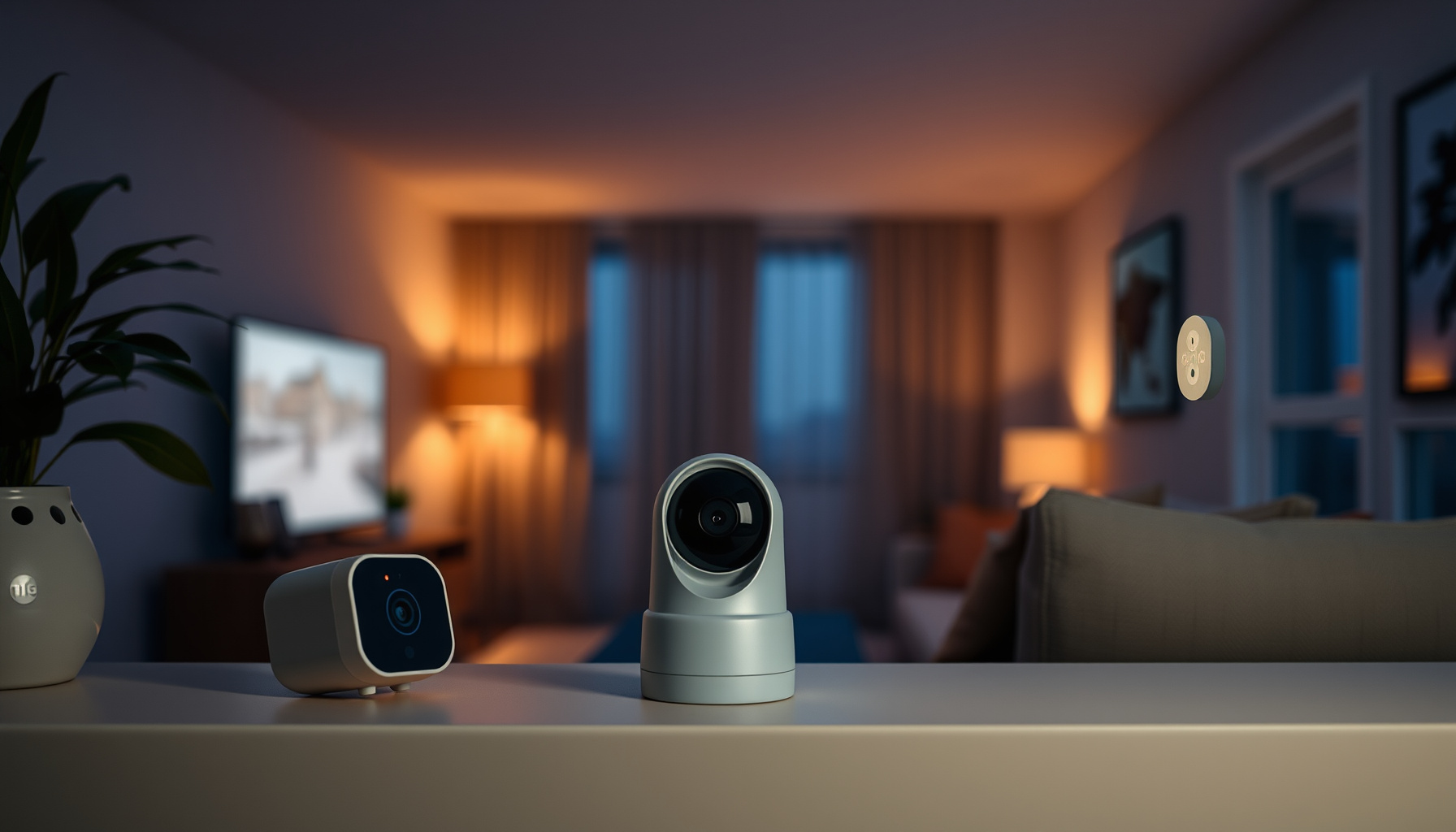
Privacy-first smart home cameras without subscription requirements moved from niche to mainstream this week: Ring is rolling out its TAKE encryption as the worldwide default for every Ring camera starting September 2026, and Wyze is shipping a $39.98 Indoor Cam Pan whose lens physically retracts into the body. Both launches land on top of a clear local-control trend — newly released Home Assistant survey data shows 89.3% of users cite local control as their top reason for choosing the platform. Below, this roundup covers the Ring TAKE default, the Wyze hardware shutter, the survey findings, SONOFF’s local-first OpenEdge push ahead of IFA 2026, and two clearly labeled Philips Hue rumors.
How This Guide Was Built
This roundup is based on official announcements, vendor blog posts, verified reporting from The Verge, Gizmodo, and HueBlog, and one peer-reviewed dataset published on Zenodo. All 14 source URLs were verified as returning HTTP 200 on August 28, 2026. Two items (Hue Nanoleaf module, Hue Play Sync Box Lite) are unconfirmed rumors sourced from a single retailer listing and a single German-language report, respectively — both are labeled as such throughout. We did not test any products hands-on. Last verified: August 2026.
Ring TAKE: encryption becomes the default for all Ring cameras
Ring TAKE — short for “Throw Away the Key Encryption” — becomes the default encryption for all Ring cameras worldwide in a phased rollout starting September 2026, rotating encryption keys every 5 minutes of footage and deleting Ring’s key copies within 24 hours, according to About Amazon.
Here is how it works: keys are generated for every 5 minutes of footage and live in an AWS Nitro Enclave, and Ring deletes its copies of those keys within 24 hours. The company says law enforcement requests will return only non-video information and encrypted video files, according to a Ring spokesperson who spoke to The Verge. The catch: TAKE is not end-to-end encryption. Ring retains temporary access to footage so cloud features like Smart Alerts and AI video search keep working, and true E2EE remains a separate, optional per-device setting.
Why it matters for your home: If you run Ring cameras, encryption will protect your footage by default from September 2026 with no settings change required — but Ring’s temporary access for AI features means the cloud path never fully closes. If that matters to you, the optional E2EE setting still exists per device.
Wyze Indoor Cam Pan: a $40 camera with a physical privacy shutter
The Wyze Indoor Cam Pan is a $39.98 pan-and-tilt camera with 360° rotation, 103° tilt, and 2K video, and its lens physically retracts fully inside the body for privacy while recording locally to microSD cards up to 512 GB, as reported by The Verge.
Beyond the retracting lens, the camera includes AI motion tracking, night vision, two-way audio, and a 95 dB alarm, and it is available now. The microSD slot supports continuous local recording without a plan, which makes the camera a candidate for a fully local pipeline: pair it with a network video recorder like the one covered step-by-step in the Frigate NVR setup guide and recordings never have to touch a vendor’s cloud.
Why it matters for your home: A retracting lens and local storage solve two different privacy problems at once — a retracted lens means nothing is captured, and a microSD card keeps footage off cloud servers entirely.
What are the best privacy-first smart home cameras without a subscription?
The best privacy-first smart home cameras without a subscription split into two camps: physical and local options like the $39.98 Wyze Indoor Cam Pan with full-body lens retraction and microSD storage, and cloud cameras with new encryption defaults like Ring’s TAKE rollout — while Home Assistant survey data showing 89.3% of users prioritizing local control explains why both camps are growing.
The honest answer depends on which risk you want to eliminate. A local-recording camera removes the cloud entirely: footage lives on your card or your NVR, works during internet outages, and requires no vendor account. A cloud camera with a strong default like TAKE protects footage stored on someone else’s servers but accepts vendor access in exchange for AI features. For pure independence, local wins; for convenience with better protection, encrypted cloud wins — and the two approaches can coexist in one house.
Why it matters for your home: Decide which boundary matters more before buying — no cloud at all, or cloud with encryption — because the hardware you pick in each camp is different.
Open Home Foundation releases Home Assistant survey data — local control wins
The Open Home Foundation has released its Home Assistant community survey dataset — 8,616 responses collected December 2024 through February 2025 — on Zenodo, and the headline result is that local control tops the reasons for choosing Home Assistant at 89.3%, per the Open Home Foundation.
The dataset is published under DOI 10.5281/zenodo.21825688 after a k-anonymity and GDPR review that cut roughly 12% of responses as a privacy precaution, per Zenodo. Open source (84.0%) and customization (81.7%) rounded out the top reasons, and 75% of respondents run their setup in a home they own. Typical installations manage 11–200 devices, and one person — 94.4% of them men — typically maintains the system. For a real-world look at what such a setup involves, see the privacy-first Home Assistant build log.
Why it matters for your home: Local control is not a fringe preference — it is the top stated priority among more than 8,600 experienced users, and this week’s product launches show vendors responding.
SONOFF bets on local-first with OpenEdge architecture ahead of IFA 2026
SONOFF has published an OpenEdge white paper (August 25, 2026) describing a local-first architecture built on browser-based local consoles and HTTP, WebSocket, MQTT, and Open API access, with explicit integration for Home Assistant, OpenHAB, ioBroker, and Node-RED, ahead of its IFA 2026 showcase, according to SONOFF.
At IFA 2026 (September 4–8, Berlin, booth H1.2-143), the company plans to show a Zigbee and Thread sensor series, dual-lens security cameras, a DIN Rail Pro series, intelligent heating, and smart irrigation, per SONOFF. Gizmodo expects smart home platforms to feature heavily at the show. If you are weighing protocols before buying into a sensor ecosystem, the Zigbee vs. Z-Wave vs. Matter comparison covers the trade-offs.
Why it matters for your home: When a high-volume budget brand builds its next architecture around local consoles and open integrations, no-cloud operation stops being a hobbyist-only feature.
Hue rumors: Nanoleaf integration module and a cheaper Sync Box
Philips Hue is rumored to launch two new products: a wall light module, reportedly priced around €40, that would bring Nanoleaf Triangle, Mini Triangle, and Hexagon panels into the Hue app according to a single Smartlights.de report, and a Hue Play Sync Box Lite spotted at UK retailer Very for £109.99 (~$150) by HueBlog.
Neither product has been officially announced. The Nanoleaf module is sourced to one German-language report, with The Verge noting there is no company confirmation; it is expected around IFA. The Sync Box Lite listing — a single HDMI output with 4K support — was a retailer listing spotted by HueBlog and reported by The Verge, not an announcement.
Why it matters for your home: If both rumors are confirmed — and only an official announcement will do that — a cheaper sync box would lower the entry price for TV lighting effects, and Nanoleaf panels inside the Hue app would mean one less app on your phone. Until then, treat both as unconfirmed.
What to watch next: IFA 2026 (September 4–8, Berlin)
IFA 2026 runs September 4–8 in Berlin, and it is the first major stage where this week’s themes get tested in public: SONOFF’s booth H1.2-143 will show the new hardware lines and, presumably, OpenEdge in action, while Gizmodo expects AI and smart home platforms to dominate the conversation.
It will be worth watching whether the promised local consoles and protocol access work as described. The Hue rumors above are exactly the kind of products that often get confirmed on show floors, so if either is real, expect word from Berlin.
What this means for your home
Two distinct privacy strategies are on display this week, and they stack rather than compete. Cryptographic privacy — Ring TAKE’s 5-minute key rotation and 24-hour key deletion, per About Amazon — protects footage that lives in someone else’s cloud, at the cost of vendor access for AI features.
Physical and local privacy — the Wyze lens that retracts into the body, microSD recording, SONOFF’s OpenEdge no-cloud design — removes the cloud from the equation entirely. The survey data says experienced users prefer the second approach; the market is starting to build the first one in as a default.
If you are building or upgrading a camera setup this fall:
- Pick your boundary first. If footage must never reach a vendor’s servers, buy local-recording hardware (microSD or an NVR) and skip cloud plans. If you want cloud convenience, encryption defaults like TAKE matter — and check whether optional E2EE is offered.
- Budget for storage instead of subscriptions. A 512 GB microSD card or a local recorder is a one-time cost that replaces the monthly line item.
- Check local API and Home Assistant support before any purchase. The IFA 2026 announcements should make that easier to verify than ever.
FAQ
Is Ring TAKE the same as end-to-end encryption?
No. TAKE is a key-rotation scheme, not end-to-end encryption: keys rotate every 5 minutes of footage, Ring deletes its copies within 24 hours via an AWS Nitro Enclave, but Ring retains temporary access to power cloud AI features. True E2EE remains a separate, optional per-device setting, according to The Verge.
Can the Wyze Indoor Cam Pan record without a cloud subscription?
Yes. The camera has a microSD slot supporting cards up to 512 GB for continuous local recording, so basic recording and alerts work without any subscription. Wyze’s Cam Plus plan stays optional and only adds cloud AI features — it is not required to store or review footage, as The Verge reports.
What is SONOFF’s OpenEdge architecture?
It is SONOFF’s local-first framework, detailed in a white paper published August 25, 2026: browser-based local consoles plus HTTP, WebSocket, MQTT, and Open API access, with explicit integration for Home Assistant, OpenHAB, ioBroker, and Node-RED. The goal is smart home operation with no cloud dependency, per SONOFF.
Where to go next
If the local-first route appeals, the Home Assistant setup guide walks through building the hub that ties cameras, sensors, and automations together, and the Frigate NVR setup guide above covers the local storage layer. To see the evidence behind this week’s local-control trend for yourself, the k-anonymized Zenodo dataset is publicly downloadable — 8,616 responses, ready to explore.
📖 Related Reads
- ToolBrain — tool reviews, LLM comparisons, and AI workflow guides
- CodeIntel Log — code quality, debugging, and software engineering benchmarks
Cross-links automatically generated from SmartHome Field Guide.
← Back to guides