Petlibro Outage: Why Smart Pet Feeders Need Local Control
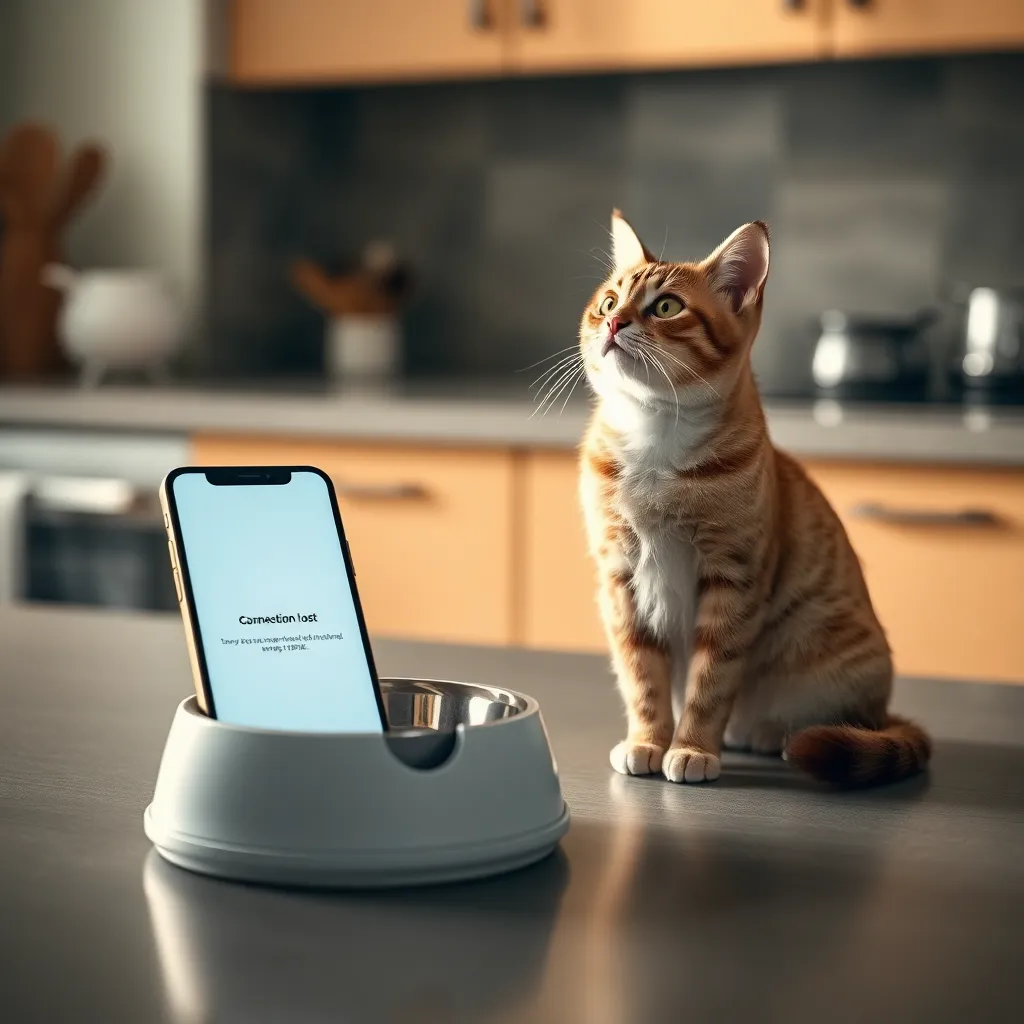
On August 11, 2026, thousands of Petlibro customers opened their apps to find their smart feeders unresponsive. Some were away from home and only discovered their pets had missed meals when they checked a camera feed or returned days later. The disruption stretched on for roughly 38 hours, and it forced a question every smart-home buyer should ask: what actually happens when the cloud goes down?
How This Was Verified
This post is based on official documentation, vendor product pages, and published reporting — we did not run the devices hands-on. We verified the outage timeline against Petlibro’s official status page and Ars Technica’s reporting, cross-checked the vendor’s offline-schedule claims against its Granary 2 and One RFID product pages, and confirmed user reports through The Verge, TechSpot, and CNET coverage. Last verified: August 2026.
What Happened During the Petlibro Outage
The Petlibro outage began on Tuesday, August 11, 2026, when the company’s status page first acknowledged a service disruption affecting the Petlibro app at about 5:00 am PT, and it was declared fully resolved roughly 38 hours later, per Ars Technica’s timeline. By 7:00 pm PT that first day, Petlibro said it had “identified a service issue affecting app access and responsiveness” and had begun recovery work. The official status page then declared at 7:00 pm PT on Wednesday, August 12 that “app services have been fully restored and are operating normally.”
The disruption touched far more than the app. User reports pointed to RFID, Granary, and Polar feeders, Dockstream fountains, and Luma litter boxes all losing connectivity, as covered by The Verge and TechSpot.
What Petlibro Said About the Outage
Petlibro CEO York Wu said the outage was “related to how the Petlibro app communicates with devices through its online servers,” and he warned that app-dependent features, including the manual “Feed Now” button, “may be disrupted” during such incidents, per The Verge and TechSpot.
That admission contrasts sharply with the company’s own marketing. The Granary 2 product page states: “If the feeder goes offline, remote control… will be unavailable, but feeding schedules will continue to run automatically.” The One RFID page makes a similar promise: “Scheduled meals continue even during network errors.”
What Pet Owners Reported
Pet owners reported the opposite of that marketing: feeders went fully offline, scheduled meals were missed, delivered late, or dispensed in partial portions, and some owners who were out of town had no way to know until they checked their cameras, as The Verge and Ars Technica documented.
Compounding the frustration, Petlibro warned that device operation history, feeding and litter records, notifications, cloud-stored videos, and highlight videos “may not be recoverable.” The scale of the incident drew coverage from CNET and Notebookcheck.
Why Local Control Matters for Smart Pet Feeders
Local control matters because every feature that depends on a vendor’s servers — the app, manual feeding, notifications, cloud video — becomes a single point of failure, while a device that stores and runs its schedule on-device keeps working when the internet does not. The outage is a textbook case: Petlibro’s product pages promised offline scheduling Petlibro Granary 2, but the reality of the outage did not match.
When you shop, ask whether the schedule lives on the device or in the vendor’s cloud. A feeder that dispenses meals from its own firmware, with a physical button that works without internet, will keep your pet fed through almost anything. For homeowners building a resilient setup, our Home Assistant setup guide and privacy-first smart home build both emphasize choosing local-first devices that maintain core functions offline.
What to do when your smart pet feeder goes offline?
When your smart pet feeder goes offline, first check the vendor’s status page to confirm a company-wide outage rather than a home-network problem, then physically verify food and water, feed manually if needed, and plan your next purchase around local, on-device schedules. The outage showed why the app cannot be trusted as your only source of truth.
- Check the status page. Confirm whether the problem is a vendor outage or something in your home network.
- Verify food and water physically. Do not rely on the app, which may show stale data during an outage.
- Assume missed meals. Logs may be unavailable — Petlibro warned that feeding records “may not be recoverable” Ars Technica.
- Feed manually. Dispense food directly, or ask a neighbor to check in.
- Buy local-first next time. Prioritize feeders with on-device schedules and physical manual-feed controls.
FAQ
Will my Petlibro feeder still feed my pet if the app is down?
Petlibro’s product pages promise that scheduled meals continue automatically during network errors, but during the August 2026 outage many owners reported the opposite. Feeders went offline entirely, and meals were missed, late, or partial, per The Verge’s reporting. Treat the offline schedule promise as unverified and check on your pet physically.
How do I feed my pet when my smart feeder is offline?
If your smart feeder is offline, feed your pet manually using their normal portion size. The app-based “Feed Now” button “may be disrupted” during outages, so it cannot be your backup plan, as TechSpot noted. Keep extra food on hand, and if you travel, arrange for someone to check in during any extended disruption.
What should I look for in a smart pet feeder that works without the cloud?
Look for feeders that store their schedule on the device, run it from firmware rather than vendor servers, and include a physical manual-feed button that works without internet. Read the product documentation for explicit offline behavior and search community reports for outage experiences, as the Petlibro case shows marketing claims do not always match reality.
The Petlibro outage turned a convenience device into a source of stress for thousands of pet owners. When you choose your next smart pet feeder, treat local control as a non-negotiable feature rather than a nice-to-have — your pet’s next meal should not depend on a vendor’s server staying online.
📖 Related Reads
- ToolBrain — tool reviews, LLM comparisons, and AI workflow guides
Cross-links automatically generated from SmartHome Field Guide.
← Back to guides