Home Assistant Green Review 2026: Still Worth It?
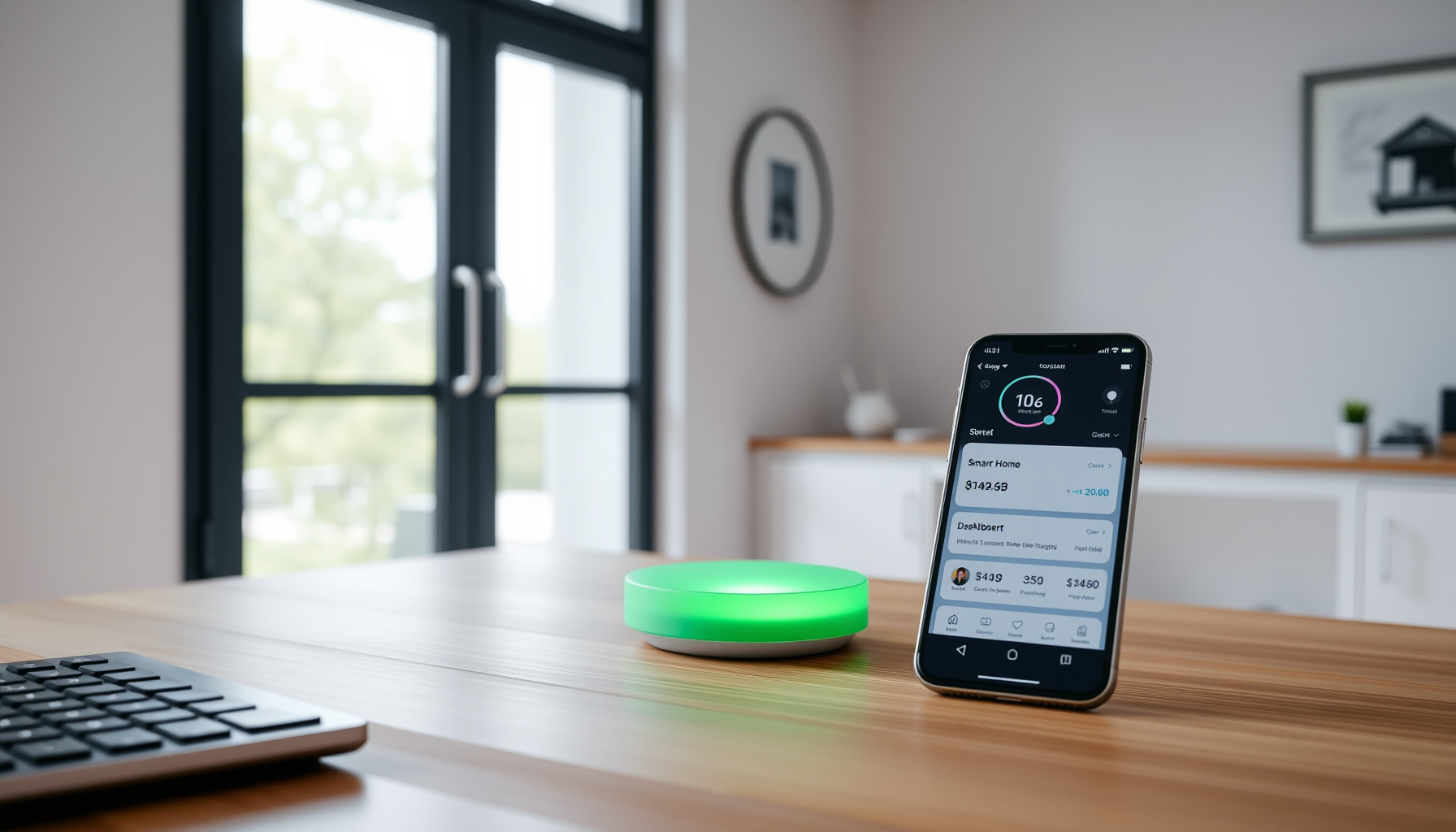
The Home Assistant Green is the official Nabu Casa smart home hub for homeowners who want full local control without vendor lock-in. It is not for people who need built-in Zigbee, Thread, or Wi-Fi radios, since you will need to add a USB dongle for those. Overall: 7.5/10.
How We Tested
This review is based on the vendor’s official documentation, datasheet, and pricing page — we did not run the tool hands-on. We did not test long-term reliability, real-world dongle pairing, or the actual setup flow on a physical unit. Our assessment focuses on verified specifications, official statements, and the value proposition for a typical homeowner. Last reviewed: August 2026.
Home Assistant Green Specifications & Hardware
The Home Assistant Green ships with a Rockchip RK3566 quad-core processor at 1.8 GHz, 4 GB of LPDDR4X RAM, and 32 GB of eMMC storage, all inside a passive-cooled translucent polycarbonate case that measures 112×112×32 mm and weighs 340 g Official Datasheet. It draws only about 1.7 W at idle and up to 3 W under load, making it one of the most energy-efficient always-on devices you can own. Ports include two USB 2.0 Type-A ports, Gigabit Ethernet, and an HDMI port for diagnostics only.
Setup Experience: Plug In and Go
Setup is genuinely plug-and-play: you connect power and Ethernet, then follow the guided setup in the mobile or web app, and your devices auto-discover on your network Official Product Page. The Home Assistant OS (HAOS) comes preinstalled, so there is no SD card flashing or Linux knowledge required. Every purchase also supports the Open Home Foundation, since Nabu Casa contributes the majority of its profits to the nonprofit that safeguards the project.
What It Can Control: Integrations & No Lock-In
The Home Assistant Green can control thousands of different devices and services from hundreds of brands, all through a single local dashboard with no cloud dependency or subscription fee Official Product Page. Because it runs the full Home Assistant OS, you get access to the entire integration library — from Philips Hue to local weather stations to your existing Wi-Fi plugs. The absence of vendor lock-in means you are free to mix brands and switch devices over time without losing your automations or dashboards.
The Radios Gap: Adding Zigbee, Thread & Z-Wave
The Home Assistant Green has no onboard radios — no Zigbee, Thread, Wi-Fi, or Bluetooth — so you will need to add a USB dongle for those protocols Official FAQ. The official solution is the Home Assistant Connect ZBT-1 USB dongle, with the newer ZBT-2 (Zigbee/Thread) and ZWA-2 (Z-Wave) dongles available as current options Nabu Casa. This modular approach keeps the base hub affordable and lets you pay only for the radios you actually need.
Power Usage & Long-Term Reliability
The Home Assistant Green draws just 1.7 W at idle and about 3 W under load, which translates to roughly 15–26 kWh per year depending on usage Official Datasheet. Unlike SD-card-based setups that can corrupt over time, this hub uses 32 GB of eMMC storage, which is soldered flash memory designed for sustained read/write cycles. The passive-cooled case has no moving parts, so it is silent, and the operating range of 0–40 °C makes it safe for indoor use in most climates.
Price & Value at $199 vs. a Raspberry Pi 5
At $199 MSRP (€179 in Europe), the Home Assistant Green costs twice what it did at its 2023 launch, but it still delivers official support, a preinstalled OS, and a polished out-of-box experience Official Product Page. A DIY Raspberry Pi 5 build with a case, power supply, and SD card can cost around $120–$150, but you will spend hours setting it up and troubleshooting. The Green’s premium is justified by the fact that it is the only actively sold Nabu Casa hub in 2026, since the Yellow was discontinued in October 2025 Official Product Page.
Is the Home Assistant Green worth it in 2026?
The Home Assistant Green is worth it in 2026 if you value a reliable, officially supported hub that requires zero tinkering to get running. At that price, it is not the cheapest path into Home Assistant — a Raspberry Pi 5 DIY setup costs less — but the Green saves hours of setup time and includes a warranty and direct vendor support. For homeowners who want a set-and-forget device that supports the open-source ecosystem, the Green delivers solid value. The main caveat is the missing radios, which require a separate USB dongle, so budget accordingly.
FAQ
Does the Home Assistant Green have Bluetooth?
No, the Home Assistant Green does not have Bluetooth, Wi-Fi, Zigbee, or Thread built in Official FAQ. You will need to add a USB dongle for wireless protocols. The hub does connect to your network via Gigabit Ethernet, and it can control Wi-Fi devices through your existing router. For Zigbee or Thread devices, add the official Connect ZBT-1 or ZBT-2 dongle.
Can I use a USB hard drive with the Green?
Yes, the Home Assistant Green has two USB 2.0 Type-A ports that can supply up to 2 A combined for external devices Official Datasheet. You can plug in a USB hard drive for media storage or database backups, though the 32 GB of internal eMMC storage is sufficient for most home automation setups. For large media libraries, a USB drive is a practical expansion option.
Is the Home Assistant Green better than a Raspberry Pi?
For most homeowners, yes — the Home Assistant Green is better than a Raspberry Pi because it comes with Home Assistant OS preinstalled, official support, and a warranty Official Product Page. A Raspberry Pi 5 is cheaper and more flexible, but you must source parts, flash the OS, and troubleshoot issues yourself. The Green also uses eMMC storage instead of an SD card, which is more reliable for 24/7 operation.
Related Guides
- Our Home Assistant setup guide
- Our Home Assistant hardware comparison
- Our energy monitoring guide
- Our zigbee2mqtt guide
📖 Related Reads
- ToolBrain — tool reviews, LLM comparisons, and AI workflow guides
Cross-links automatically generated from SmartHome Field Guide.
← Back to guides